A
Aiko Yamamoto
Osaka, Japan
Oct 2, 2025

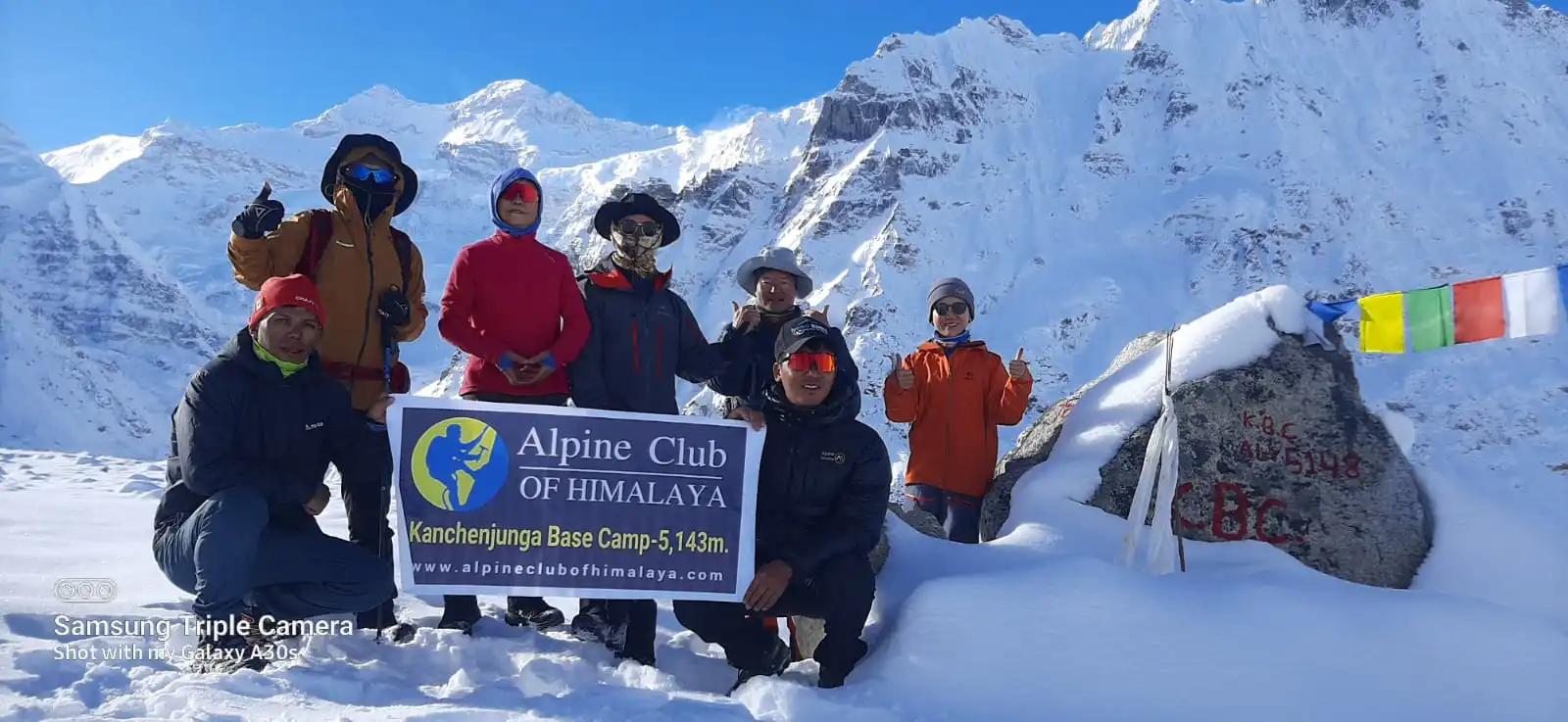
This 16-day trek to Kanchenjunga North Base Camp was an extraordinary adventure. The trail was peaceful and full of natural beauty. The majestic views of Kanchenjunga and surrounding peaks left me speechless.
Destination
Nepal
Duration
16 Days
Best Weather
March, April, May, September, October & November
Max Altitude
5140m (Kanchenjunga Base Camp)
Accommodation
Hotel and Guesthouse
Meals
Full Board during Trek and Breakfasts, Welcome and Farewell meals in Kathmandu
Transportation
Private vehicle / Flights
Group
Min 1 pax
Difficulty
Strenuous
Activities
Trekking
The Kanchenjunga North Base Camp Trek is an exciting journey into the remote Kanchenjunga region of eastern Nepal, offering breathtaking views of Mt. Kanchenjunga (8,586 m/28,169 ft), the world’s third-highest mountain. The trail passes through peaceful villages, dense forests, alpine landscapes, and the Kanchenjunga Conservation Area, home to diverse flora and wildlife. The Kanchenjunga region crosses several climatic zones, from subtropical forests and rhododendron woodlands to alpine meadows and glacial landscapes. The trek reaches Pangpema (5,100 m/16,732 ft), the North Base Camp of Kanchenjunga, where spectacular views of the surrounding peaks and Kanchenjunga Glacier await. With its remote trails, welcoming local communities, and untouched Himalayan wilderness, the Kanchenjunga North Base Camp Trek is ideal for trekkers seeking an authentic and less-crowded adventure in Nepal.
The Kanchenjunga North Base Camp Trek is ideal for trekkers looking for a remote and less-crowded Himalayan adventure. Unlike popular routes such as the Annapurna Base Camp (ABC) Trek and Everest Base Camp (EBC) Trek, the Kanchenjunga route offers a more peaceful wilderness experience with fewer trekkers and untouched landscapes. The trek is unique for its remote location, diverse landscapes, rich local culture, and spectacular views of Mt. Kanchenjunga. While ABC is known for its lush valleys and close-up mountain scenery, and EBC attracts trekkers with the legendary Everest and Sherpa culture, the Kanchenjunga North Base Camp Trek takes you deeper into eastern Nepal through traditional villages, dense forests, alpine meadows, and dramatic glacial valleys. Reaching Pangpema (5,100 m/16,732 ft) provides an unforgettable viewpoint of Mt. Kanchenjunga and the surrounding peaks. The combination of isolation, natural beauty, cultural experiences, and challenging trails makes this trek a distinctive choice for those seeking an authentic Himalayan adventure.
The Kanchenjunga North Base Camp Trek stands out for its remote location, peaceful trails, and untouched Himalayan landscapes. Compared with the Annapurna Base Camp (ABC) Trek and Everest Base Camp (EBC) Trek, the Kanchenjunga route receives fewer trekkers, offering a more secluded wilderness experience. While ABC is famous for its diverse landscapes and close-up views of the Annapurna range, and EBC is renowned for Everest views, Sherpa culture, and busy trekking villages, the Kanchenjunga North Base Camp Trek takes you through remote villages, dense rhododendron forests, alpine meadows, and dramatic glacial valleys. Reaching Kanchenjunga North Base Camp at Pangpema (5,100 m/16,732 ft) offers spectacular views of Mt. Kanchenjunga and surrounding peaks. Its combination of remoteness, wilderness, cultural diversity, and fewer crowds makes it a unique choice for experienced trekkers seeking an authentic Himalayan adventure.
The Kanchenjunga North Base Camp Trek offers stunning views of Mt. Kanchenjunga (8,586 m/28,169 ft), Janu Himal (7,710 m/25,300 ft), Makalu (8,485 m/27,838 ft), Kabru (7,412 m/24,318 ft), and other Himalayan peaks. The trail passes through lush forests, rivers, alpine meadows, and yak pastures, with snow-capped mountains surrounding the route. As you gain altitude, the scenery becomes more dramatic, making the Kanchenjunga North Base Camp one of Nepal’s most rewarding trekking destinations for mountain and nature lovers.
The following permits are required for trekking to Kanchenjunga Region.
This permit must be processed through a valid local travel agency registered in Nepal. You will need a minimum of two trekkers in a group to obtain the permit.
You will need:
Note: All the trekking permits are handled by the Alpine Club of Himalaya.
You will be accommodated in 3-star hotels in Kathmandu. During the trek, we will be staying at lodges/ teahouses providing basic facilities. At some locations, you will be staying in makeshift camps.
Along the Kanchenjunga Trek, you will be provided with various Nepali and Tibetan ethnic cuisines. The region has several tea-house along the trail run by local inhabitants providing basic and minimal facilities. However, drinking water taps are accessible with natural water supplies all along the trekking trail that are untreated. So direct use of the water is not recommended. You may refill boiling water or cold filter water from any of the teahouses along the trail. If you buy a water purification tablet, chlorine drops or utilize SODIS (sunlight assisted) filtration procedures for further assurance, saving money, and reducing plastic pollution.
The best time for the Kanchenjunga North Base Camp Trek is during spring (March to May) and autumn (September to November). These seasons offer stable weather, clear mountain views, and comfortable trekking conditions.
Autumn brings clear skies, excellent visibility, and pleasant daytime temperatures, making September, October, and November ideal for enjoying the spectacular views of Kanchenjunga and the surrounding peaks.
Spring offers mild weather, blooming rhododendrons, colorful wildflowers, and green alpine pastures. You may also see herds of yaks and sheep grazing across the highlands.
The monsoon season (June to August) is generally less suitable due to heavy rainfall, muddy trails, landslides, and reduced mountain visibility. Winter can also bring heavy snowfall and very cold conditions at higher elevations.
All clients participating in any activity must have travel insurance. Personal injury, death, hospital expenditures, repatriation fees, helicopter rescue. Any other disease covered by the insurance plan will be given. We highly advise you to acquire a comprehensive insurance plan from a trustworthy insurance company.
All travelers must carry a valid passport with at least six months of validity from the date of entry into Nepal. Most foreign nationals require a tourist visa, which can be obtained either in advance from a Nepalese Embassy or Consulate or upon arrival at Tribhuvan International Airport (TIA) in Kathmandu. For the most up-to-date visa information, eligibility, visa fees, and online application details, please visit the official website of the Department of Immigration, Nepal: https://www.immigration.gov.np/visa-information
If you decide to cancel your booking for the Kanchenjunga North Base Camp Trek please notify Alpine Club of Himalaya in writing (via email or official communication) as early as possible. The following cancellation charges apply:
These fees cover administrative costs, permits, pre-arranged logistics, and potential losses caused by late cancellations.
In the rare circumstance that Alpine Club of Himalaya must cancel the trek due to unforeseen or uncontrollable events such as extreme weather, natural disasters, or safety concerns in the region, you will be offered either:
Your safety is our highest priority, and cancellations are only made when absolutely necessary.
Alpine Club of Himalaya cannot be held responsible for cancellations, delays, or extra expenses resulting from force majeure events, including but not limited to:
In such cases, participants are responsible for any additional personal costs such as extra accommodation, changed flights, or insurance claims. We strongly recommend that all trekkers purchase comprehensive travel insurance covering trip cancellations, medical emergencies, and force majeure events before joining the trek.
The Kanchenjunga North Base Camp Trek is a rewarding adventure into one of Nepal’s most remote and spectacular Himalayan regions. From peaceful villages and lush forests to high-altitude landscapes and breathtaking views of Mt. Kanchenjunga, every part of the journey offers something memorable. If you are looking for a less-crowded, authentic, and challenging Himalayan experience, the Kanchenjunga North Base Camp Trek is an excellent choice. With proper preparation, the right season, and good acclimatization, this trek can become an unforgettable journey through the heart of the Kanchenjunga region.
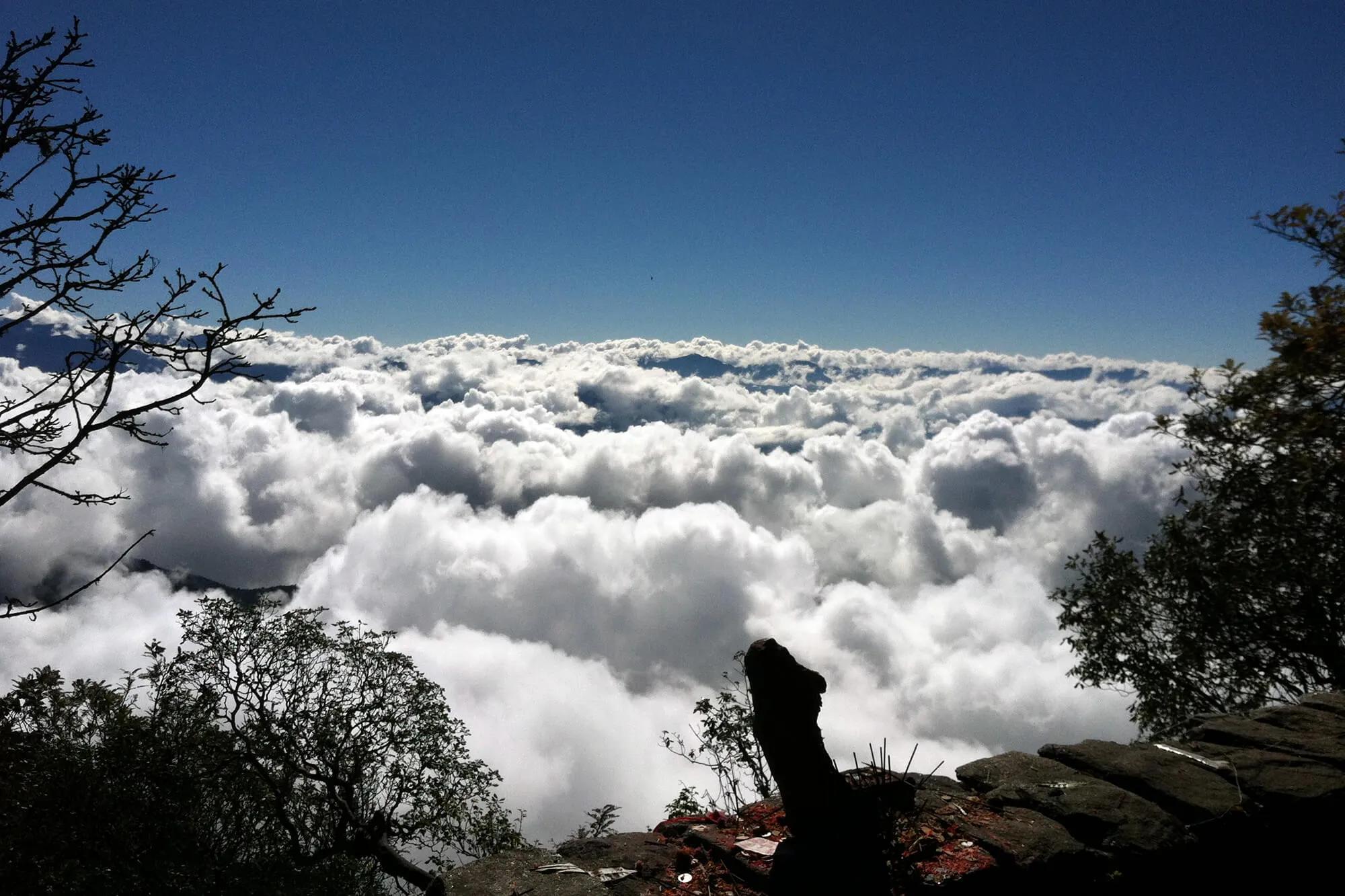
After breakfast heads towards the domestic airport and catch a flight to Bhadrapur a bustling town located in the southeastern region of the country. Upon reaching Bhadrapur proceed towards Taplejung. The drive takes around seven to eight hours taking you from the plain lands of Terai to the hills of central Nepal.
Max. Elevation
2420m
Duration
45 minutes flight and 8-10 hours drive
Accommodation
Guesthouse
Meals
Breakfast, Lunch, Dinner
All airport/hotel pick up and drop in private car/van
1 Nights accommodation in Kathmandu including breakfast, 3* Twin Sharing
14 Nights stay in Lodge/Guest House during trek
An experienced English speaking Trekking Guide and a Porter during trek
Salary, food, insurance and lodging cost for guide and porter
Breakfast, Lunch, Dinner and Tea/Coffee during trek
Welcome and Farewell Meals and Breakfasts while in Kathmandu
National Park Permit and TIMS for Kanchenjunga
Airfare from Kathmandu to Bhadrapur and return flight to Kathmandu and domestic flight departure taxes
Bhadrapur to Suketar by sharing car/jeep
Private car from Taplegunj to Bhadrapur
ACH Kitbag and T-shirt for you
Down Jacket and Sleeping Bag that needs to be returned to office after trek completion
Driver, His salary, meals, and accommodation
Fuel, Road Taxes, and Parking Fees
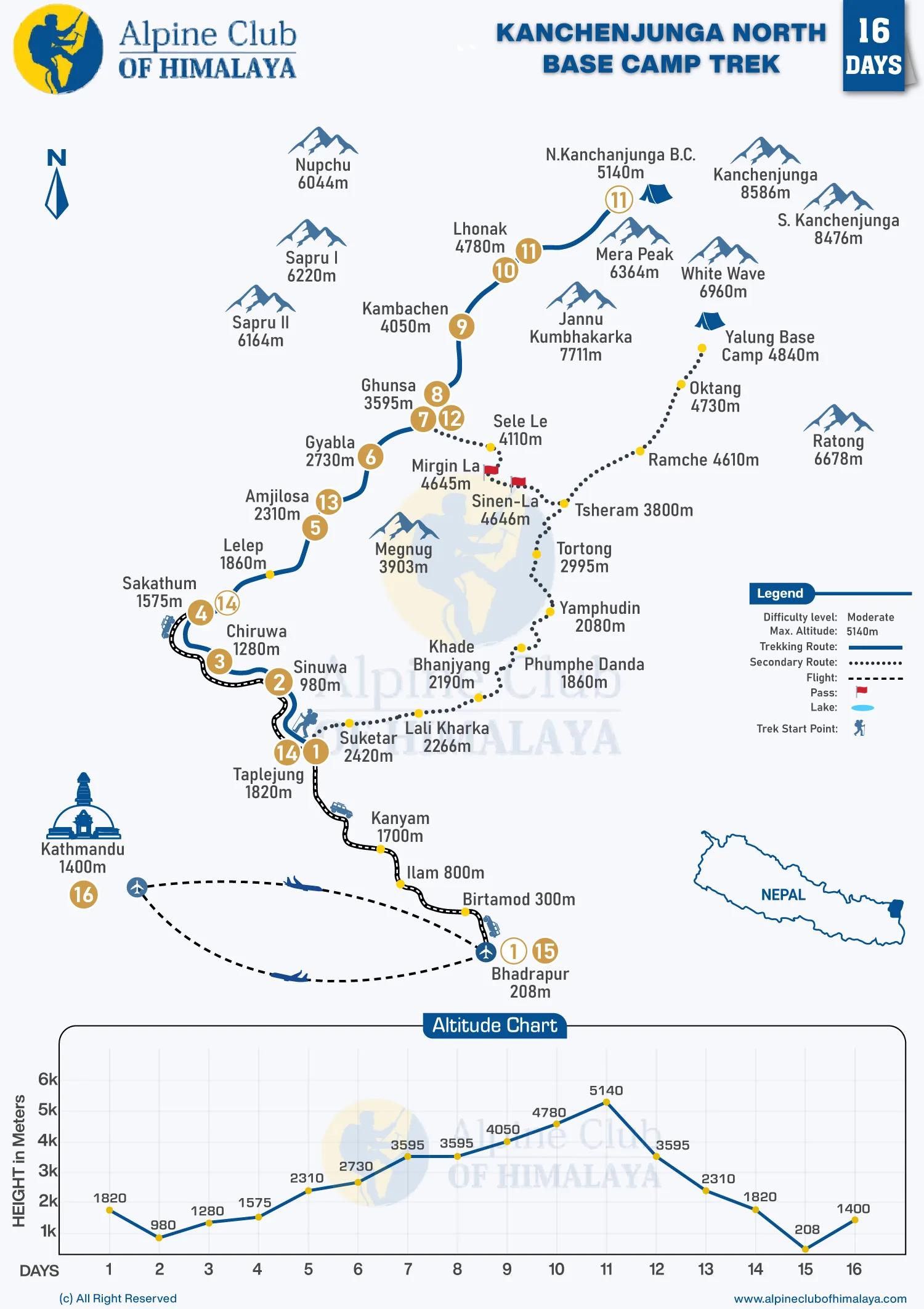
Click on map to view in fullscreen
The Kanchenjunga North Base Camp Trek reaches an altitude of 5,140 meters (16,863 feet) and traverses remote mountain terrain with limited facilities. Proper equipment is essential for comfort, safety, and protection against changing weather conditions.
This equipment list is suitable for trekking during both the spring (March–May) and autumn (September–November) seasons, which are the best times to undertake the Kanchenjunga North Base Camp Trek.
A
Aiko Yamamoto
Osaka, Japan
Oct 2, 2025
C
Carlos Ramirez
Lima, Peru
May 15, 2025
D
Daniel Thompson
London, United Kingdom
Mar 15, 2025
24/7 Support
Need help? we're at your service
Associated With


We Accept Cards

Office of the company registrar License: 66813/066/067 || Tourism Industry Division License:1142
All content and photography within our website is copyright & may not be reproduced without our permission.
Develop By: IT Sansaar